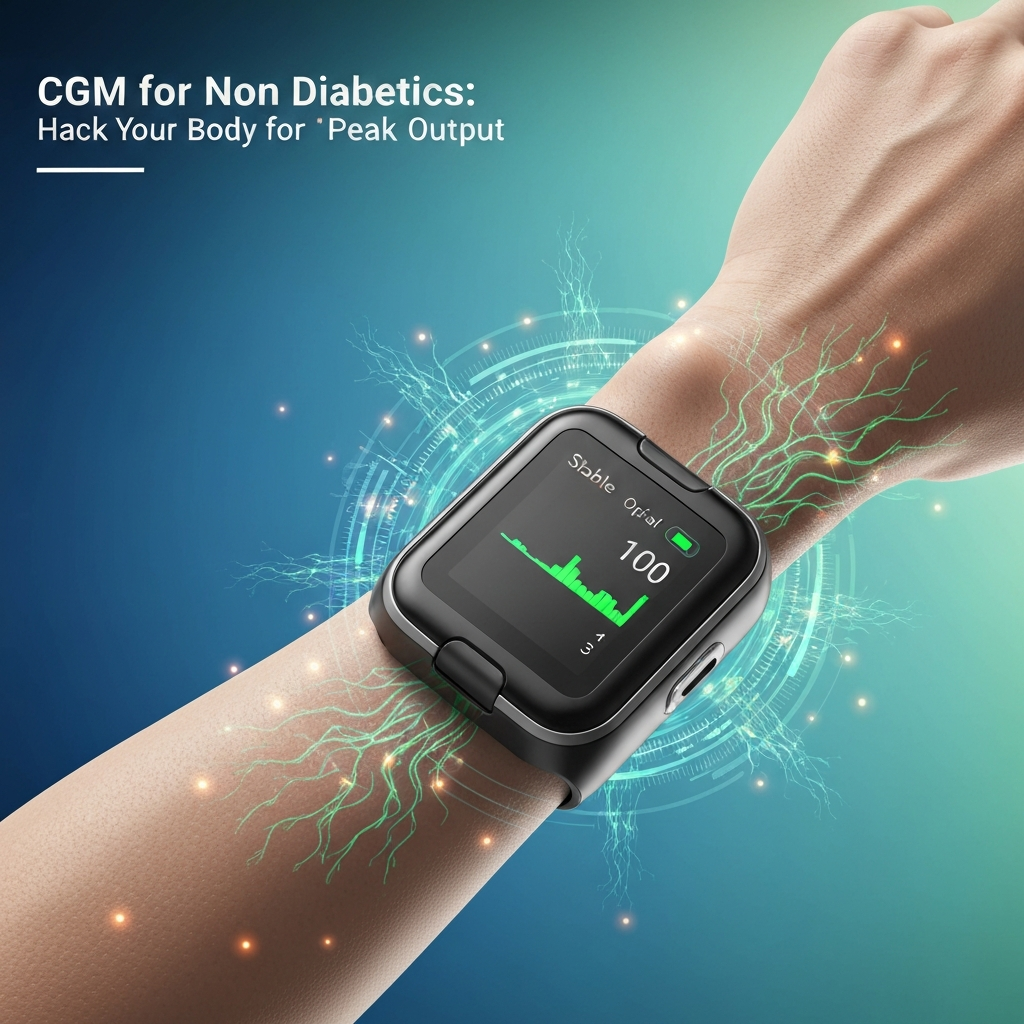
I believe using a cgm for non diabetics is the ultimate way to hack your metabolic output. Most people live in a constant state of biological guesswork. They follow generic diets—low carb, high fat, vegan—without checking the actual telemetry. I don’t have time for that. I need data. If I am building a system, I need to know the inputs and the outputs… precisely. This is why I track my glucose like I track my server uptime.
The standard health advice is broken. Actually, it is designed for the average person, and I have no interest in being average. Using a cgm for non diabetics allows me to see behind the curtain. It reveals how my body handles stress, sleep, and that “healthy” oatmeal I used to eat. Specifically, it showed me that oatmeal spikes my sugar like a bowl of candy. I deleted that from my OS immediately. You cannot optimize what you do not measure.
Why a cgm for non diabetics Is My Primary Metabolic Sensor
A continuous glucose monitor is a small wearable device. It sits on your arm or abdomen. It measures glucose in your interstitial fluid. This happens every few minutes, day and night. Overall, this provides a movie of your metabolism rather than a single photo. Traditional finger-prick tests are snapshots. They miss the spikes and the crashes. Instead, this device gives me a real-time dashboard on my smartphone.
I view my body as a complex biological machine. Specifically, glucose is the primary fuel source for this machine. When glucose levels are unstable, the machine glitches. I feel brain fog. I get tired at 2 PM. Plus, my focus disappears when I need it most. By using a cgm for non diabetics, I can keep my fuel levels steady. This ensures maximum uptime for my brain and body. I treat my nutrition like a deployment pipeline—clean, efficient, and monitored.
System Warning: Do not expect the sensor to match a blood meter perfectly. Interstitial fluid lags behind blood glucose by about 15 minutes. It is the trend that matters. Don’t panic over a 5-point difference.
The Technical Edge of Using a cgm for non diabetics in Biohacking
Biohacking is about control. I use a cgm for non diabetics to find my specific triggers. Everyone responds differently to carbohydrates. For example, my friend can eat white rice with zero issues. Moreover, white rice sends my glucose into the stratosphere. This biochemical individuality is why “one size fits all” is a lie. Therefore, I use my data to build a custom meal plan that works for my DNA.
Most 9-5 workers are stuck in a cycle of glucose spikes. They eat a bagel for breakfast. They get a massive insulin surge. Similarly, they experience a massive crash two hours later. This is why the vending machine is popular at mid-morning. Currently, I avoid this by watching my real-time data. If I see a rise, I go for a 10-minute walk. This simple automation—movement after a meal—flattens the curve. Naturally, this keeps my energy levels consistent all day long.
Pro-Tip: Pair your sensor data with a sleep tracker. High glucose before bed will ruin your REM cycles. I noticed my “recovery” score drops whenever I eat late. Data doesn’t lie… even when I want it to.
The Power of Real-Time Glucose Insights
The immediate feedback loop is addictive. When I eat a meal, I see the result within minutes. This direct connection changes behavior faster than any doctor’s lecture. Actually, seeing a 180 mg/dL spike after a “healthy” smoothie is a wake-up call. I don’t need willpower when I have evidence. Specifically, the data acts as a feedback mechanism for my choices. It simplifies everything.
I have identified specific “clean” foods that are actually toxic for my focus. For instance, sweet potatoes cause a lingering elevation in my blood sugar. Overall, I prefer foods that provide a slow, steady release. This is how I maintain a “flat line” on my graph. Instead of chasing highs, I chase stability. Plus, this stability is the secret to avoiding the dreaded “afternoon slump” that kills productivity.
Moreover, I can test supplements in real-time. I wanted to see if apple cider vinegar actually worked. Therefore, I drank it before a high-carb meal and watched the sensor. The spike was significantly lower. Similarly, I tested berberine and cinnamon. This is how a digital strategist approaches health—test, measure, and iterate. Currently, my “stack” is fully validated by my own physiological data.
Hyper-Personalized Nutrition: Beyond the Basics
Generic nutrition is for people who like losing. I want the most efficient path to performance. A cgm for non diabetics turns nutrition into a hard science. We are moving past the era of counting calories. Naturally, we are entering the era of tracking metabolic response. This is hyper-personalization at its finest. I don’t care what the label says; I care what my sensor says.
System Warning: Sensors are expensive and usually require a prescription in some regions. Services like Levels or Nutrisense act as the middleware to get you the hardware. Be prepared to pay for the data.
Tailoring Your Diet for Maximum Energy
Energy is my most valuable currency. I cannot buy back time, but I can maximize the energy I have. Specifically, I use cgm for non diabetics data to prevent energy leaks. Every glucose crash is a leak. Actually, it takes a toll on your cognitive load. You lose focus. You get irritable. Instead, I eat for a steady 80-100 mg/dL range. This is my “high-performance zone.”
Plus, I have learned about food sequencing. If I eat fiber first, then protein, then carbs, the spike is minimal. Moreover, this allows me to eat things I enjoy without the metabolic cost. Therefore, I can still have a burger—without the bun—and stay in my zone. Similarly, I have learned that cold potatoes have a different effect than hot ones. Resistance starch is a real thing. Currently, I am fine-tuning every meal for maximum output.
Weight Management Without the Guesswork
Weight loss is a side effect of metabolic health. High insulin levels lock your fat cells. If your glucose is always high, your insulin is always high. Actually, you can’t burn fat in that state. Specifically, I use my cgm for non diabetics to stay in a “fat-burning” window. When my glucose is low and stable, my body accesses stored energy. Overall, this makes weight management effortless.
Instead, most people try to starve themselves. They eat low-calorie snacks that spike their sugar. Plus, they wonder why they are always hungry. Moreover, the glucose crash triggers intense cravings for more sugar. It is a bug in the human operating system. Therefore, I fix the bug by stabilizing the glucose. Similarly, I find that fasting is much easier when you start from a stable baseline. Currently, I use my sensor to decide when to break a fast.
- Identify your “trigger foods” that cause 30+ point spikes.
- Test your “healthy” staples to ensure they aren’t spiking you.
- Use movement (walking) to blunt spikes after eating.
- Monitor sleep quality in relation to late-night glucose.
- Don’t obsess over every tiny bump; look for the weekly trends.
The Athlete’s Edge: Fueling the Machine
Athletes have used this tech for years. Now, it is available for the rest of us. I use a cgm for non diabetics to time my pre-workout fuel. Actually, I want my glucose rising just as I start my set. Specifically, this provides immediate fuel for my muscles. Instead of guessing, I know exactly when I am primed for peak power. Plus, I can see how different types of training affect me.
Moreover, high-intensity training can actually cause a glucose spike. This is the liver releasing stored energy to meet the demand. Therefore, I don’t panic when I see a rise during a heavy lift. Similarly, I use the data to optimize my post-workout recovery. I need enough of a spike to trigger muscle protein synthesis, but not so much that I crash later. Currently, I am the most “dialed in” I have ever been.
Conclusion: Stop Guessing, Start Measuring
The cgm for non diabetics is the most important tool I have found. It removed the “black box” element of my health. Actually, it made me realize how much I was sabotaging myself with “healthy” foods. Specifically, it gave me back my time and my focus. I no longer waste hours in a post-lunch fog. Instead, I am always ready to execute. Plus, the long-term health benefits of stable glucose are undeniable.
Moreover, the cost of the sensor is a small price for the data it provides. I spend thousands on software and hardware for my business. Therefore, spending a few hundred on my own biological hardware is a logical investment. Similarly, I expect this technology to become standard for everyone within the next decade. Currently, you have the chance to be an early adopter. Naturally, you should take it.