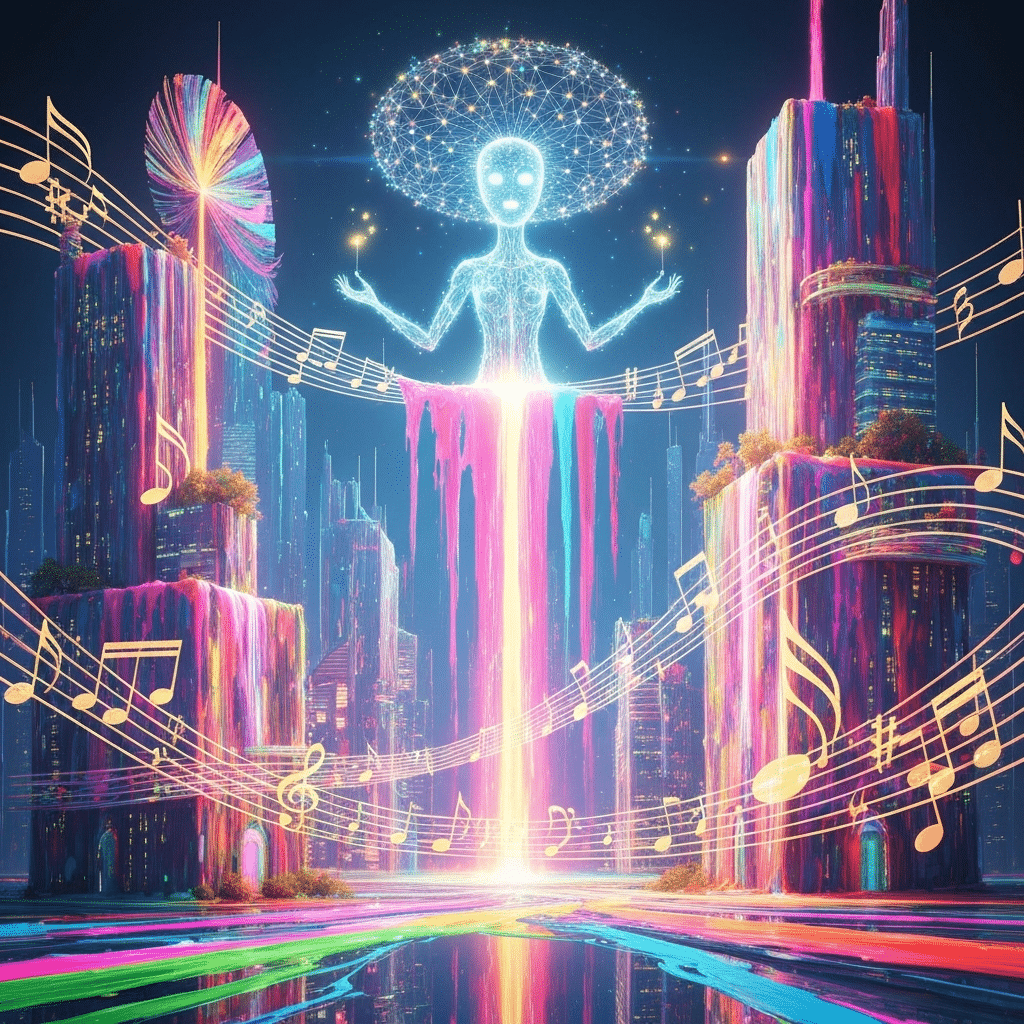
Art, design, and entertainment are changing fast. You see artificial intelligence (AI) popping up everywhere, especially in the AI creative industries. This isn’t just another tool; it’s a huge force, shaking up old ways and opening exciting new paths for artists and innovators. So, how we dream up, make, and enjoy creative work is shifting big time, all thanks to smart algorithms and machine learning.
A New Creative Era Begins!
We’re writing a fresh chapter in human creativity, mostly because of AI. Right now, it’s an exciting time where human smarts and artificial intelligence work together. This strong partnership really changes how we see and use AI in creative fields. For example, the meaning of “AI and creativity” is getting bigger. Machines can now make original content that we once thought only humans could. Truly, groundbreaking projects and new art forms answer the question, “How AI is transforming creative industries?” every single day.
Old artistic limits are getting challenged and redrawn. Tasks that used to take a lot of effort are now automated. This frees up creators so they can focus on big ideas and making things better. So, AI helps build a more efficient and fresh creative process. Artists and designers can now try new things with amazing speed and size. Plus, AI looks at huge amounts of data, finding trends and patterns. This guides creative choices and can lead to results a person might not have imagined.
AI’s Reach: Changing Creative Fields
You can see AI used in many different creative areas, and each one feels its unique touch.
Visual Arts & Generative AI: A New Canvas
In visual arts, Generative AI art has really jumped out. Algorithms create images and visual pieces that sometimes look just like human work. This is why “AI impact on art” gets so much talk. People discuss who made it, what’s truly original, and what art even means anymore. Artists now use AI tools to kick off ideas, try out different styles, and even finish whole pieces. This teamwork speeds up the creative process a lot. Ideas can come to life and get refined incredibly fast.
- Artists are developing new styles.
- AI-generated images help explore complex visual stories.
- It’s easier for everyone to access art creation tools.
Making Music with AI: A New Beat
The music world has also welcomed AI with open arms. Smart algorithms work in “AI in music production” to write melodies, make harmonies, and even churn out full songs. AI helps with making beats, synthesizing vocals, and mastering. It gives musicians strong tools to boost their creative work. Also, AI looks at what listeners like. This helps artists and labels get audience engagement and make music that fits. This blend opens up fresh sound options and makes the production process much smoother.
Design Gets a Boost from AI
Design, especially graphic design, is also seeing a big change thanks to AI. “AI in graphic design” tools help designers with things like making logos, sorting out layouts, and even building brand identities. Predictive design helps guess what users will like. This creates visual messages that work better. As a result, the design process now involves more back-and-forth and uses more data. This lets designers make custom and very specific creative solutions. The faster work from AI means designers can spend more time on big-picture strategy and coming up with ideas.
What’s Next? AI’s Big Chances & Hurdles
As AI keeps moving fast, talking about the “Future of creative industries AI” brings both thrill and worry. We see so many chances, from working faster to totally new kinds of art. But this forward step also comes with its tricky parts.
People are really thinking about the “Pros and cons of AI in creative sector.” On one side, AI gives us amazing tools for new ideas, custom work, and getting past creative blocks. But on the other side, some worry about losing jobs and that human art might seem less valuable. You hear the question, “Will AI replace artists and designers?” often. While machines might take over some everyday tasks, most people believe humans still bring something special: empathy, smart thinking, and real feelings. These things are just too important. So, we see the “Impact of artificial intelligence on artistic professions” as more about working together than simply replacing people.
Without a doubt, we must deal with the “AI challenges creative industry.” People are talking about intellectual property, data ethics, and the risk of all creative work starting to look the same. It’s key to make sure human artists get fair pay when their work trains AI models. Also, we need to stop AI from having biases when it creates things. Policymakers and industry leaders are looking closely at these important points.
Ethics & That Human Spark
The “Ethical implications of AI in creative work” are super important. As AI systems get smarter, questions pop up about copyright, what’s original, and how to fairly use training data. We need clear rules and policies to keep artists safe and make sure AI tech grows responsibly. People are thinking hard about how we’ll define who owns creative work when machines can make art.
Finding a good balance is key when we talk about “Balancing AI innovation and human creativity in design.” AI can do a lot, but the special spark of human intuition, understanding cultures, and deep feelings? That’s something AI just can’t replace. So, most people see “The role of AI in enhancing creative processes” as a helper, like a co-pilot, not the only one flying the plane. AI can manage the tough, repeated jobs, look at complicated data, and even suggest new ways to do things. But human creators still bring the main vision, how we understand it, and the feelings it gives us. In the end, we use AI to make the human part of creative work stronger, not smaller. This builds a teamwork where both AI and humans do well.
So, What’s the Takeaway?
Basically, bringing AI into creative fields marks a huge moment for us all. Yes, there are challenges, but the chances for new ideas and growing our creative reach are massive. As AI tools get better, they’ll work even more closely with human artists. The future of creativity isn’t about machines replacing people. Instead, it’s a future where AI’s smart help makes human cleverness even bigger and more inspired. This constant change will totally reshape what’s possible in art, design, and entertainment for years ahead.