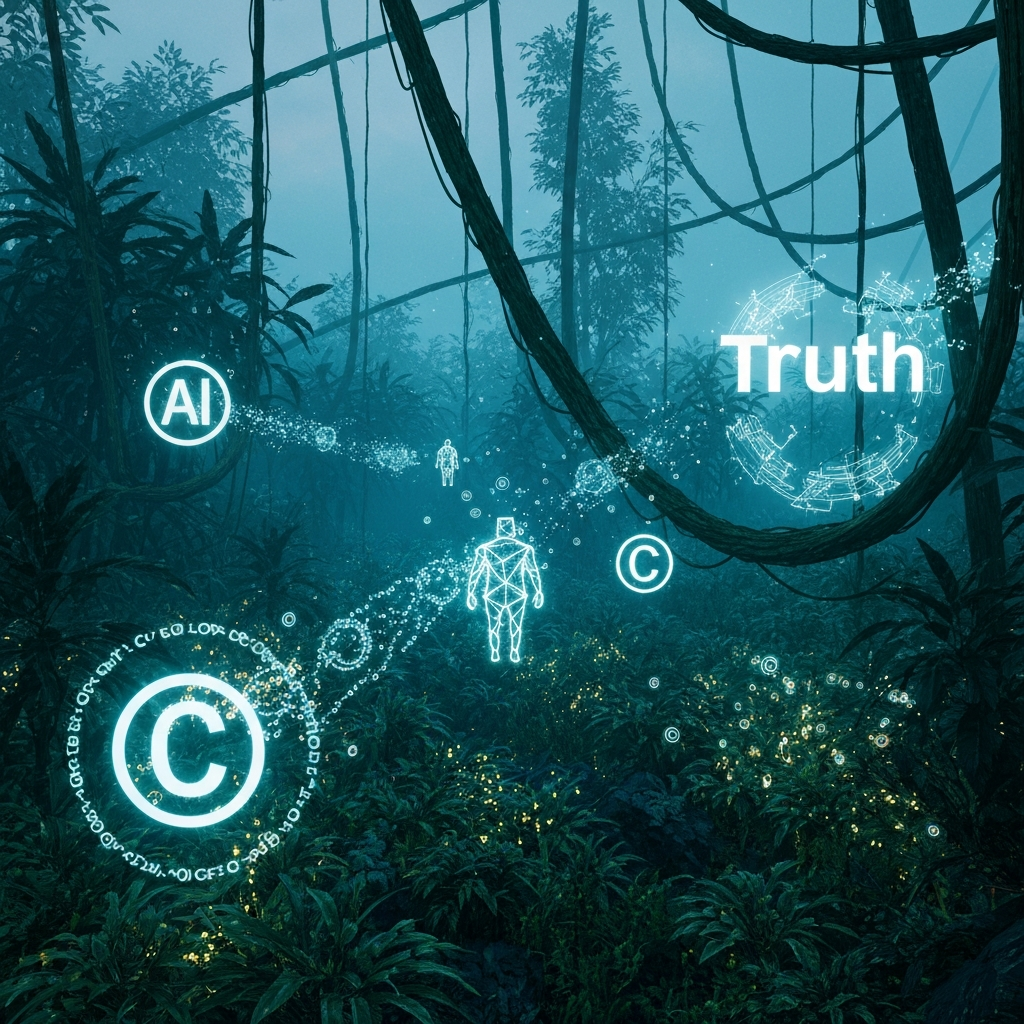
AI’s really changed the digital world, starting a new age of content. So, **AI content copyright** is a big deal. As computer brains get smarter, making everything from stories and songs to pictures, people are asking more and more about who owns these things. It’s a complex talk. We’ve got to look at the rules guiding stuff made by machines.
The Changing Industry of AI Content Copyright
Copyright usually gives ownership to people. But **AI generated content** challenges this. People used to think you needed human originality to get copyright protection. That’s changing. When a machine, even one taught by humans, makes something new, figuring out who owns it gets much harder. Is it the coder? Is it the person who gave the AI the idea? Or should we call the AI the creator? These aren’t easy questions. Their answers will shape digital content’s future.
What Makes AI Generated Content Original?
Copyright law has a core idea: originality. Works must come from a human and show some creativity. With AI systems, the “comes from” part gets really looked at. If an AI system uses lots of old copyrighted material to learn patterns, then makes something new, is that new piece truly original? It could just be a copy. This is especially true if it takes big parts or styles from its training data. So, experts are re-evaluating what originality means. It’s a new kind of creation.
Addressing Copyright Infringement AI Concerns
Here’s why: The chance of **copyright infringement AI** is a big worry. AI models learn from huge amounts of data. Many of these datasets have copyrighted material. If an AI makes something that looks a lot like an existing copyrighted work from its training data, someone could claim infringement. This is tough in music and art. Stylistic similarities or direct copies might be hard to tell apart from new works. Plus, figuring out who’s to blame — the AI builder, the user, or even the AI itself — creates big legal problems. We haven’t solved them yet.
Ethical Ideas and Intellectual Property AI
Beyond just the law, deep **AI content ethics** are being talked about. Creativity used to be only for humans. Now, machines are doing it. This shift makes us ask about the real value of human art and writing. Is human creativity worth less when an AI can make similar things fast and in huge numbers? We must also think about artists, writers, and musicians. Their jobs depend on their unique creative work. These ethical thoughts mix with how we build **intellectual property AI** rules. We want to balance new ideas with fair pay for creators.
Who Owns the Copyright of AI Generated Art?
This question goes straight to a very hot topic. Right now, most places don’t see AI as an author or copyright owner. So, the copyright for **AI generated content** usually goes to the human who put in the most creative effort. This could be the person who wrote the prompt. It could be the developer who built the AI. Or it might be the company that owns the AI system. But clear rules aren’t everywhere. This leads to many different understandings. Everyone agrees we need clarity here. It’s key for creators and businesses.
Navigating Generative AI Copyright Challenges
The world of **generative AI copyright** is full of problems. One tough part is telling the difference between getting an idea and actually copying something. Human artists often get ideas from other works. But AI systems can copy styles or parts with amazing exactness. Another problem is the huge amount of AI-made content. Checking every piece by hand for possible copying just isn’t practical. So, new tech tools, like AI-powered detectors, are being looked at. They’ll help manage these difficult situations.
Protecting Your Rights: Strategies for AI Content
As things change, creators are naturally asking: **How to protect copyright with AI content?** While specific laws are still developing, we’ve got some good advice. Here’s what you can do:
* Keep careful records. Note your AI prompts, settings, and why you wanted the AI to make something. This proves human involvement.
* Try to register AI-assisted works with copyright offices if you can. This makes your claims stronger.
* Understand the rules of the AI tools you’re using. Many platforms might keep certain rights to content made on their systems.
Legal Challenges of AI Generated Content Copyright
The **legal challenges of AI generated content copyright** are many-sided. Courts are struggling with what counts as an author, what’s original, and what’s a copy when AI is involved. Different copyright laws across countries make things even harder. What’s okay in one place might not be okay somewhere else. Lawsuits are starting to happen. These will set examples. We expect these legal fights will be really important. They’ll help define what you own and how you can use AI content.
AI Content Originality and Copyright
The basic question of **AI content originality and copyright** stays at the center of this talk. If an AI just mixes existing parts, did it really make something new? Or does the newness come from the human telling the AI what to do and picking the best output? This debate shows the struggle between AI’s power to make tons of material and the human-focused rules of copyright law. Those rules aim to protect real human creative effort.
Conclusion
So, AI becoming a creative tool has started a complex and fast-moving time for **AI content copyright**. The old rules of intellectual property are getting a tough test. This makes us talk about what’s original, who’s the author, and our ethical duties. As AI tech keeps getting better, legal experts, tech people, and creators will need to work together. They’ll build strong and fair rules. These rules must protect human creators. Plus, they must help new ideas grow in AI. We believe careful thought and quick policy-making will really help us through these new waters.